

Navigating Through AI — A Leadership Imperative

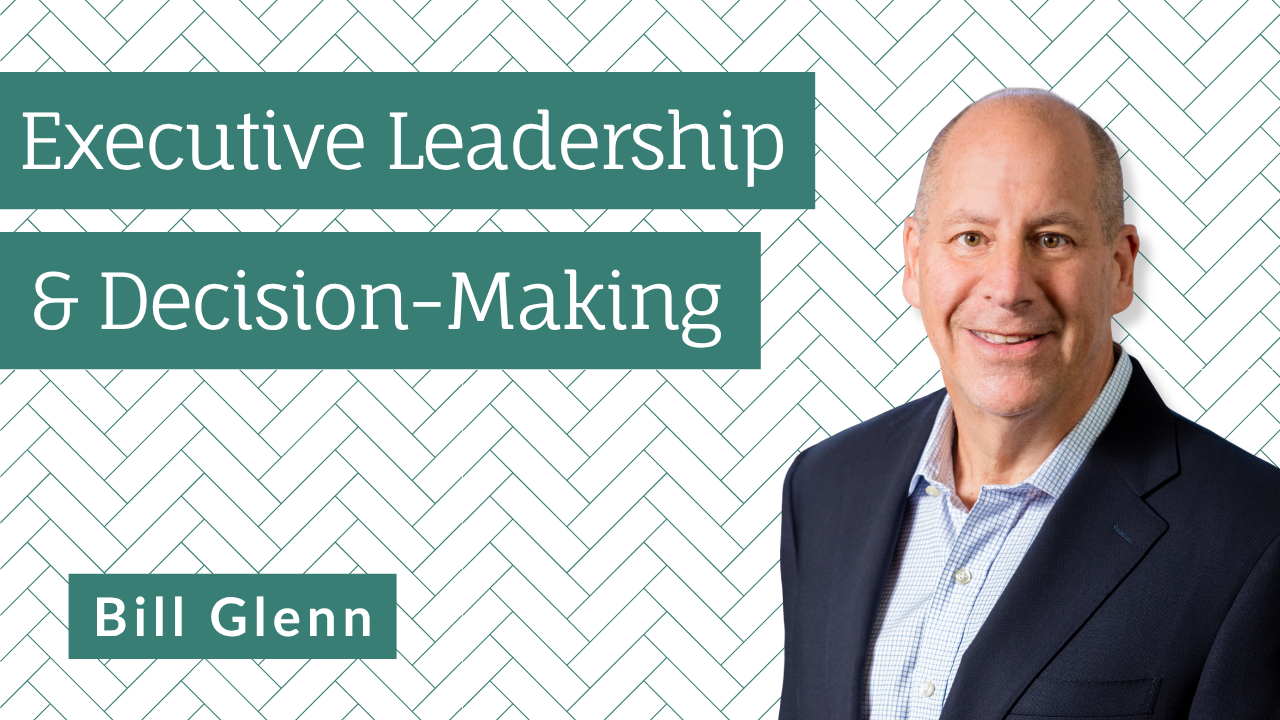
Bill Glenn
Executive Chairman

AI is not just another wave of technological evolution—it’s an accelerant, magnifying the already volatile, uncertain, complex, and ambiguous (VUCA) environment in which organizations currently operate. Unlike many innovations that have either enhanced efficiency or driven value creation, AI does both. It is a strategic lever that will fundamentally reshape business models, decision-making and talent strategies.
For C-suite executives, this transformation presents both an opportunity and a challenge: the need to scale their leadership capabilities to harness AI’s full potential while mitigating internal disruption. All functions will be impacted and priorities reset - a leadership challenge requiring CEOs, CHROs, and senior leaders to rethink how their companies will compete, operate, and create value for customers, shareholders, and investors. They will be tested to evolve the culture to optimize business performance.
This transformation will be disruptive. Resources will be redeployed, capital reallocated, and investments prioritized potentially resulting in internal battles. Executives must lead with an enterprise–wide lens, with a focus on transparency and collaboration and to communicate and model that the 'enemy is not from within.'
Why the Enemy Is Not from Within
One of the most common pitfalls during major disruption is internal competition for resources leading to misaligned priorities, slow execution and resistance to change. The true enemy is external:
1. Competitors leveraging AI to gain an edge while you hesitate.... both traditional and non-legacy competitors who will suddenly enter the space. Think, who is the Amazon?
2. Existing and potential customers’ needs evolve faster, through competitive AI adoption, than your organization’s ability to keep up.
3. The new war for talent: AI-driven companies recruit, hire and reward the most skilled AI workforce and those leaders who are experienced in leading disruptive and value-added transformation.
AI’s success will be driven by internal adjustments in organizational structure, talent and development, an eye on plans for the marketplace and external awareness and value creation. This transformation's success is contingent on several leadership skills from the CEO, CHRO and other senior executives: agility, resilience, purposeful communication, empathy and rigorous decision making.
The Mandate for CEOs, CHROs, and Executive Leadership Teams
AI is breaking traditional barriers to entry, allowing new competitors to scale rapidly, and forcing established organizations to abandon previously held assumptions. AI is transforming customer behavior across all segments including B2C, B2B, or B2B2C. That's because it is redefining competitive landscapes. Non-legacy competitors—organizations that previously had no foothold in a sector—can now emerge rapidly due to AI’s scalability and efficiency. CEOs must ask themselves: ‘Where is the Amazon of my industry that I haven’t seen coming?’

Those who can integrate AI into their decision-making, leadership development, and corporate culture will be best positioned to thrive in this next era of disruption. CEOs and leadership teams must define what winning looks like and how AI will be a value add and how the business model will be competitively differentiated.
As CEOs begin to prioritize AI as a strategic imperative, has the potential to affect their business model, competitive positioning, customer needs, talent, and innovation. During this period of change, the CEO- CHRO partnership becomes more critical than ever.
What does winning look like and what is a new growth algorithm?
How will customer buying habits change?
How will the competition change and who is the new, non-legacy competitor that will emerge?
How do we ensure and create a differentiated value proposition for the market, employees, and shareholders?
The CEO’s role in this transformation is not just about championing AI adoption but about ensuring that AI is embedded into the strategic core of the business. That means moving beyond treating AI as an efficiency tool and instead leveraging it as a competitive differentiator.
CEOs who fail to recognize AI’s potential to reshape their business models will find themselves outpaced by more adaptive competitors. The implications are clear: a reactive approach to AI will not suffice. Organizations must proactively integrate AI into their operational frameworks, using it to identify emerging market shifts, anticipate customer needs, and create entirely new avenues for growth with a requisite cultural adaptation.
These imperatives require leadership to emphasize cultural factors for success such as agility, resilience, authenticity, and having the right talent in the right place at the right time. These factors exponentially affect the further AI changes the landscape, and with that, cultures must evolve.
CHROs have become the executive partner to their CEO. And in today’s VUCA environment the volume and velocity of complex issues sit with the CHRO and their HR teams. They bridge the gap between AI and people and play a critical role in AI driven transformation, leadership development, and cultural adaptation.
HR teams must shift from being administrators of policies to key influencers in AI-driven transformation. They need to anticipate workforce shifts, reskill employees proactively, and guide cultural adaptation to ensure that AI enhances—not disrupts—the employee experience. CHROs play an essential role in cultural adaptation as AI reshapes business models.
While core company values remain, cultures must evolve to match the new changing business model and operations. The CHRO’s team must transition from traditional HR functions to becoming strategic business advisors, aligning leadership and workforce strategies with AI-driven transformation.
Executive leadership teams will also have a significant role to play in integrating AI into their long-term planning and strategies.
As we advise leaders in change management and influence, we have identified four key factors to align on AI adoption:
Agility and continuous learning – AI is evolving rapidly; organizations must embrace a culture of rapid upskilling and adaptation.
Data-Driven and Human-Centered Decision-Making – While AI enhances insights, leadership must balance algorithmic recommendations with ethical and human considerations.
Cross-Functional Collaboration and Transparency – AI should not be siloed within IT but integrated across business units to drive enterprise-wide value.
Trust, debate, and psychological safety- Leaders must create an environment where AI-driven decisions can be questioned, diverse perspectives are valued, and open debate leads to better outcomes.
To successfully enable these factors, leaders need to build trust, define winning and ensure collaborative conflict and debate. Decision frameworks must evolve to incorporate AI while maintaining the strategic foresight human leadership provides.
The challenge is not just in implementing AI but in creating a culture that can absorb its implications and understand its advantages. A leader’s ability to drive adoption can only work in an organizational culture that embraces rapid learning and cross-functional collaboration. The role of leadership, therefore, is not simply to deploy AI as a tool but to rewire the organization’s DNA to make AI integration a core competency.
That means developing leaders at every level who can interpret AI-driven insights, ensuring strong ethical and strategic guardrails, and continuously adapting to the accelerating pace of change in the competitive landscape and customer needs.
Disruption Is a Competitive Advantage for Growth—If You Allow It to Be
AI is not a short-lived initiative or an episodic event...

Disruption is inevitable. The question is whether you will lead the change or be forced to react to it. AI can transform your business model and is a clear choice whether to embrace and adopt it.
Executives who are attuned to the marketplace and competitors, both new and emerging, recognize that AI is already being leveraged for efficiency, innovation, and a strategic advantage. For leaders, this means that AI should not be viewed not as an internal disruptor but rather as an enabler of value creation through faster decision-making, deeper insights, and operational scalability.
The companies who will gain share and significantly outpace over the next decade are those who aggressively integrate AI into their business strategies, value creation and go to market execution rather than waiting until they are forced to.
Executives face a critical choice: embrace AI as a value-add or resist it out of fear of disruption. AI is not the enemy—stagnation is. While leadership hesitates, customers are choosing more innovative providers. The real risk of AI stagnation is that you risk losing your top talent and customers for those who are more agile and less risk adverse.
Leaders must view AI as a strategic asset with implications and applications across the business model, integrated into the company’s overall growth strategy rather than viewing it as a standalone IT initiative. AI’s implications span leadership, talent, business structure, and culture.
Balancing AI Insights and Human Led Decision-Making
Despite AI’s rapid integration, the long-term implications remain uncertain. Will it be a force for exponential growth, or will it introduce complexities and risks that challenge the very foundations of some businesses?
These competing forces will make effective leadership and decision-making a premium, requiring more than intuition or reactive decision-making. It demands a disciplined approach to evaluating AI-driven change, balancing short-term gains with long-term resilience, and navigating ethical, operational, and competitive uncertainties.
In Crenshaw’s coaching advisory work with senior executives, effective decision-making is emphasized as a critical skill that empowers leaders to harness the full potential of AI-driven ideas and insights. Crenshaw coaches are uniquely equipped to guide leaders through AI-driven transformation, leveraging their experience in prior market disruptions. Their insights help executives develop the adaptability, resilience, and leadership judgment necessary to navigate AI’s complexities.
Embracing AI driven insights while maintaining strong leadership judgment with an eye on talent and value creation optimizes results. By providing a structured methodology to assess risks, opportunities, and long-term impact, a well-structured framework can help organizations make informed, strategic decisions that take multiple streams of information into account. It ensures that AI is not just a tool for efficiency but a catalyst for sustainable growth, innovation, and transformation. As AI continues to redefine the rules of business, the leaders who leverage sound decision-making processes will be the ones shaping the future—rather than being disrupted by it.
To navigate the disruptive force of AI effectively, leaders must move beyond reactive decision-making and adopt a structured approach that balances innovation with long-term strategy. AI accelerates decision-making, but it does not replace leadership judgment. The challenge is balancing AI-driven insights with the organization’s strategic objectives. Effective leaders must define ‘what winning looks like’ and use AI as an augmentation tool rather than an unquestioned authority. Understanding how AI is reshaping industries, redefining competitive advantage, and influencing decision-making at every level is the first step in leveraging its potential rather than being overwhelmed by its challenges.
Scaling Leadership in an AI-Driven Organization
CHROs must ensure that AI-driven cultural transformation is deliberate and structured.
In an AI-driven enterprise, leadership is no longer about top-down decision-making but about fostering agile, cross-functional collaboration. AI demands a different kind of executive leadership—one that is dynamic, fluid, and deeply interconnected across functions. The traditional leadership hierarchy, with its rigid command-and-control structures, is becoming a liability. The pace of transformation is too rapid for organizations to rely solely on top-down decision-making. Leaders must cultivate an environment where AI-driven insights are distributed across teams, enabling decision-making to occur in real time at every level of the organization.
For CHROs, the mandate is urgent. AI is not simply automating tasks—it is redefining the very nature of work. Workforce strategies must shift from merely hiring for current skill sets to continuously developing AI fluency across all levels of the organization. This requires a radical rethinking of leadership development, talent acquisition, and employee engagement. AI will not replace human workers en masse, but it will make those who are proficient in leveraging AI far more valuable than those who are not.
CHROs must ensure that organizations do not just have an AI strategy, but a workforce that is equipped to execute it. This means embedding AI literacy into leadership training, creating systems that enable employees to collaborate with AI seamlessly, and designing incentives that reward adaptability and innovation.
Leadership competencies must evolve to prioritize adaptability, resilience, and AI fluency. Executive onboarding must assess alignment with the company’s evolving AI-driven culture, not just its historical identity. Additionally, CHROs should implement continuous listening mechanisms, such as AI-driven sentiment analysis and workforce engagement analytics, to track cultural shifts in real time.
Operating and division leaders must act as the connective tissue between corporate AI strategy and frontline execution. AI’s impact will not be felt equally across all business units, and leaders at this level must be empowered to adapt AI applications to their specific operational realities. Success will depend on their ability to break down internal silos and integrate AI insights into real-time decision-making. The organizations that outperform in an AI-driven economy will not be those that simply have the best technology but those that have the most aligned, AI-literate leadership teams capable of navigating the complexities of this new landscape.
The path forward requires a collective commitment from the entire executive team. AI will not simply optimize existing business models; it will fundamentally redefine them. The question is not whether AI will shape the future of leadership—it already is. The real question is whether today’s leaders are prepared to scale themselves and their organizations fast enough to keep pace.
How Business Leaders are Integrating AI
AI is transforming executive decision-making at an extraordinary pace at all levels by enabling companies to reimagine their strategies and redefine customer engagement at scale. AI-powered organizations are building entirely new value ecosystems, leveraging predictive analytics and generative AI to anticipate market shifts, personalize offerings, and unlock previously untapped revenue streams.

However, adoption is not consistent across the board. AI is creating a competitive divide between early adopters and laggards. Certain AI-driven organizations are seeing higher profitability, increased efficiency, and enhanced customer experiences. Meanwhile, companies slow to embrace AI cite concerns over ROI, workforce displacement, and lack of AI literacy at the executive level.
The long-term impact of AI remains uncertain. While organizations that harness AI to not only refine but redefine their industries have the potential to shape the next era of economic growth, those that over leverage the technology without fully understanding market demand or external constraints may expose themselves to heightened risk.
Companies that fail to anticipate regulatory scrutiny, ethical concerns, and other ESG expectations could face significant backlash, legal hurdles, or reputational damage.
Over-reliance on AI without a clear strategic vision—such as automating critical decision-making without sufficient human oversight—can lead to unintended consequences, from algorithmic bias to operational failures. In industries with stringent regulatory frameworks, such as finance and healthcare, AI missteps could result in both financial penalties and loss of consumer trust.
One notable example of AI integration is Intuit, which has embedded AI into its core business model. As one of the largest financial software providers, Intuit has transitioned from offering traditional transactional services to an AI-driven ecosystem that proactively enhances customer financial well-being. By leveraging AI for intelligent automation, the company now provides real-time, AI-powered financial guidance, fundamentally reshaping how it interacts with customers.
On the other hand, JPMorgan Chase has strategically implemented AI for risk management and fraud detection but maintains a cautious approach regarding its broader deployment. The bank ensures that AI operates within a framework of rigorous oversight, particularly as regulatory scrutiny of AI-driven financial services intensifies. Concerns over systemic bias and potential discrimination have prompted JPMorgan and similar institutions to prioritize responsible AI governance. Without robust compliance measures, companies risk regulatory penalties that could outweigh AI’s efficiency gains.
AI is Redefining Leadership Structures and Roles
The rise of AI is also redefining leadership structures and executive roles. Companies are evaluating their leadership models for decentralization of authority, increased flexibility, and AI-supported decision-making. This shift has sparked significant questions about what type of leaders are needed—whether technical experts should take the helm or whether current leaders should deepen their AI fluency without relinquishing strategic control.
One of the most evident changes is the emergence of AI-focused executive roles, such as the Chief AI Officer (CAIO). A PwC survey found that 33.1% of companies have already appointed a Chief AI Officer, with 43.9% believing such a role should exist in their organization. However, there is an ongoing struggle with defining the role’s effectiveness, with 52.4% of companies reporting challenges in AI leadership turnover and lack of clarity about AI leadership responsibilities.
AI governance committees and ethics boards are also gaining traction. Many Fortune 500 companies now recognize AI oversight as a board-level responsibility, ensuring ethical and responsible AI use.
Rather than concentrating AI adoption in a single executive role, some organizations are embedding AI leadership across different teams. For example, Verizon has rejected the idea of an "AI czar," instead empowering frontline teams to drive AI implementation with the support of a centralized center of excellence. This structure ensures AI adoption is operationally relevant rather than just a top-down directive.
Technical Leadership vs. AI-Fluent Business Leadership
A debate continues over whether AI engineers and data scientists should lead, or if traditional executives must instead deepen their AI fluency. An interesting case-study tested AI’s ability to act as a CEO in a simulated business environment, revealing that while AI outperformed human executives in data-driven decision-making for short-term gains, it struggled with black swan events and long-term strategic thinking. Although AI models can be continuously refined to adapt to new variables, this underscores the enduring value of human intuition in navigating the unpredictability of global markets.
The key takeaway is that leaders do not need to be AI engineers, but they must be AI-literate. PwC found that 58% of executives lack AI training, a significant barrier to effective AI adoption. AI is best leveraged as a tool to enhance executive intuition, providing data-driven insights to support decision-making. For example, AI is increasingly being used to test business strategies before implementation. Fortune 500 leaders now integrate AI-based scenario planning into their strategic processes, enabling real-time adjustments based on AI-generated forecasts.
A prime example is Maersk, which has integrated AI into its strategic decision-making to manage global supply chain volatility. The company employs AI-powered digital twins—virtual models of its logistics network—to simulate disruptions such as port congestion and geopolitical risks. These AI-driven simulations allow Maersk to proactively adjust its supply chain operations, ensuring operational efficiency even in the face of external shocks. This kind of AI-driven foresight is becoming an essential capability for executives aiming to navigate complex, rapidly changing business environments.
The future of leadership in an AI-driven world is hybrid. Successful leaders will be those who:
Understand AI’s capabilities and limitations
Use AI to enhance decision-making rather than replace human judgment
Integrate AI governance into their leadership structures
Upskill their teams and themselves to work alongside AI
An Adaptive Decision-Making Framework for the Age of AI
While AI adoption is accelerating, it also introduces new risks. There are technical, ethical, and regulatory risks, such as misinformation, bias, cybersecurity vulnerabilities, and regulatory uncertainties. Investors and executives alike recognize that managing AI’s risks is as critical as capitalizing on its opportunities.
However, a significant business risks remains in over relying on AI to deliver insights and strategies that can effectively navigate a VUCA environment. As leaders contend with increased pressures and a rapid pace of change, having a well-defined decision-making framework that considers several variables, inputs, and perspectives can create a strategic advantage. Through these decision-making frameworks, senior leadership teams can not only respond to AI-driven disruptions but power-up their decision-making capability by integrating the power of AI.
Crenshaw's decision-making framework is designed to help leaders navigate challenges by providing structured guidance for executives to make informed, adaptive, and resilient decisions in the face of disruption, particularly with the rise of AI-driven transformation.
The framework includes:
Data-Grounded Decision-Making: Utilize quantitative and qualitative insights to drive decisions.
Collaborative Conflict: Enable a culture where diverse perspectives are encouraged and rigorously debated to surface the best solutions.
Maintaining an External Lens: Stay ahead of non-legacy competitors and regularly assess market forces that can upend your business model.
Investing in Team Diversity: Ensure leadership teams reflect diverse perspectives, backgrounds, and experiences.
Team Internal Density and External Range: Build cohesive, aligned teams internally while encouraging external partnerships with cross-functional collaboration to prevent siloed decision-making.
Adaptive Resilience: Develop a culture of agility where strategic pivots are encouraged, and leaders are equipped to face volatile business environments.
Grounding Decisions in Data: The Foundation for AI Success
AI thrives on data, but that does not mean all data is created equally.
For many organizations, the assumption that AI can automatically generate value simply because it is deployed is a dangerous misconception. The reality is that AI is only as effective as the data that fuels it, and in a corporate environment, data is often fragmented, biased, or outdated. Without rigorous data governance, AI-driven decisions can lead companies astray—producing misleading insights, reinforcing biases, or automating inefficiencies rather than eliminating them.
For AI to be an enabler rather than a disruptor, organizations must create a structured approach to evaluating data integrity. This means treating data as a strategic asset rather than an afterthought. Companies must establish clear AI-specific KPIs that measure not only efficiency gains but also the quality of AI-generated insights. If an organization is relying on AI to make critical operational, financial, or customer decisions, leaders must continuously assess whether the AI is making those decisions based on reliable inputs.
Is AI detecting real patterns or merely amplifying existing biases?
Are automation tools increasing productivity, or are they introducing unseen risks?
Once data integrity is ensured, AI can significantly enhance decision-making by identifying trends and correlations that human analysis might miss. AI-powered predictive analytics can anticipate market shifts, operational risks, and evolving customer behaviors with greater accuracy than traditional forecasting methods. This reduces uncertainty and enables proactive rather than reactive strategy formulation. AI’s ability to process massive datasets quickly means leaders no longer need to rely solely on historical data; real-time analytics provide dynamic insights that can help executives respond to rapidly changing conditions.
The companies that thrive will be those that empower both technical and business leaders to collaborate in shaping an AI-integrated future.
Encouraging Collaborative Conflict: AI as a Catalyst for Constructive Debate
AI adoption is not a smooth, linear process.
It introduces new efficiencies, but it also disrupts existing workflows, challenges traditional roles, and forces organizations to reexamine long-standing decision-making structures. The natural reaction of many teams is resistance—whether from IT departments concerned about security risks, finance teams questioning ROI, or customer service leaders wary of AI’s impact on human engagement. These tensions, while often framed as roadblocks, should instead be viewed as necessary friction that ensures AI’s integration is deliberate, thoughtful, and strategically aligned with business priorities.
A healthy organization does not seek to eliminate debate around AI—it embraces it. AI-driven transformation must be accompanied by structured forums where distinct functions engage in constructive dialogue about the opportunities and risks at stake. A finance team might see AI as an immediate cost-cutting opportunity, while an operations team sees it as a longer-term investment in agility. A CHRO might recognize AI’s potential in workforce planning but also understand its risks in creating algorithmic bias in hiring decisions. These differing viewpoints are essential, as they prevent AI from being implemented in a vacuum without considering broader implications.
When integrated correctly, AI can enhance collaborative decision-making by providing an objective, data-driven foundation for debate. AI-powered sentiment analysis tools can assess employee reactions to AI initiatives, ensuring leadership addresses concerns proactively. AI can facilitate scenario planning by simulating different business strategies and presenting quantifiable outcomes for each option. This allows leadership teams to compare potential paths based on empirical data rather than assumptions.
Additionally, AI-driven tools can analyze customer feedback data, helping teams assess market sentiment and refine product strategies collaboratively. By acting as a neutral intermediary, AI can help mediate debates between departments—such as finance, operations, and HR—by surfacing data-driven insights that cut through subjective biases.
Maintaining an External Lens: AI’s Impact Beyond the Organization
AI reshapes industries and redefines competitive dynamics, many organizations remain fixated on AI’s internal applications—automating workflows and streamlining operations, —without fully accounting for how AI is changing the broader landscape in which they compete.
The most significant AI-driven disruptions often come not from within an industry but from outside it. For example, financial institutions who will not be upended by their peers but by AI-powered fintech startups that leverage machine learning to create hyper-personalized customer experiences. Retailers are not only competing against e-commerce giants, but also AI-driven recommendation engines that predict consumer behavior.
Organizations that fail to keep an external lens on AI’s impact risk becoming blind to emerging threats and opportunities. To counter this, companies must continuously benchmark their AI adoption against competitors—both traditional and non-traditional players. This means not just tracking direct competitors but analyzing how AI is driving new business models across industries.
Are customers expecting AI-driven personalization that the company is not yet delivering?
Are regulatory changes reshaping how AI can be deployed in key markets?
Companies must maintain a proactive, forward-looking approach, ensuring AI strategy is not just about keeping up internally but about staying ahead externally.
AI-powered competitive intelligence tools continuously track market dynamics, identifying emerging threats and opportunities before they become mainstream. AI can synthesize multiple strands of data inputs from industry reports, social media, and consumer buying behaviors to provide executives with real-time insights into shifting trends. This enables companies to benchmark their AI adoption against competitors and refine their strategies accordingly. AI can also monitor regulatory changes across multiple jurisdictions, alerting compliance teams to new policies that may affect AI deployment.
Investing in Team Diversity: AI’s Success Depends on Who Designs It
AI does not operate in a vacuum. It reflects the assumptions, biases, and priorities of those who develop, train, and implement it. Organizations that fail to build diverse teams in AI decision-making risk embedding biases into their systems, limiting their AI’s effectiveness, and undermining its strategic value.
In addition to being a technological transformation, it is a workforce transformation. Organizations must ensure that AI-driven decision-making includes a broad spectrum of perspectives.
They must always keep in mind ‘who is building AI, and who are they building it for?’
This line of thinking can ensure that organizations keep all populations and perspectives in mind with who this technology is meant to serve. Without this diversity, AI can reinforce existing inequities, create blind spots in decision-making, and ultimately fail to deliver on its intended promise.
Ensuring AI fluency across the organization is just as critical. Many executives today remain hesitant to engage deeply with AI because they lack a technical background. This is not sustainable. AI literacy must become a core competency across leadership teams. CHROs must lead the charge in embedding AI education into leadership development programs, ensuring that executives at all levels understand AI’s potential and its risks. Organizations that invest in developing AI-literate teams—both in terms of technical expertise and strategic oversight—will gain a decisive competitive advantage.
Building Team Internal Density and External Range: Stability in an Era of AI Disruption
AI forces organizations to walk a tightrope between maintaining internal alignment and responding with agility to external market shifts. Companies that rigidly apply AI without room for adaptation risk becoming locked into solutions that quickly become outdated. Conversely, companies that pursue AI without clear internal alignment risk chaotic, uncoordinated adoption that creates more inefficiencies than it solves.
AI adoption must be strategically integrated across an organization to ensure alignment at both the team and enterprise level. One of the biggest risks in AI-driven decision-making is siloed implementation—where individual teams or business units develop AI strategies independently, leading to disjointed priorities, duplicated efforts, and conflicting objectives.
The key question leaders should ask is:
Does AI align our internal team’s strategic objectives with the larger business priorities?
If AI is only improving one department’s efficiency but does not integrate with broader enterprise goals, then its potential is being wasted. The leadership team must ensure that internal objectives are not only well-defined but also clearly mapped to how the company measures success.
A key benefit of AI is its ability to connect disparate data points and uncover opportunities for collaboration across departments. AI-powered enterprise intelligence platforms can ensure that individual team strategies align with company-wide goals, identifying areas where teams can support, rather than duplicate, efforts. AI-driven project management tools can highlight cross-functional dependencies, helping leaders prioritize initiatives that create enterprise-wide value rather than isolated efficiencies.
Internal AI Centers of Excellence can serve as cross-functional hubs that ensure AI initiatives are not siloed within individual departments but aligned with enterprise-wide objectives. These centers provide a structured framework for knowledge sharing, governance, and rapid course correction, ensuring that AI does not just generate insights but translates them into meaningful business outcomes.
Building Adaptive Resilience: AI as a Continuous Evolution, not a One-Time Adoption
AI is not a single transformation event—it is an ongoing force that will continue to evolve and disrupt for years to come. Unlike traditional IT systems, AI must be designed for continuous learning, adaptation, and refinement. Organizations should ensure their AI models are regularly updated with new data, with feedback loops in place to enhance accuracy and mitigate bias over time.
Governance frameworks must incorporate ongoing monitoring, ethical reviews, and course corrections, ensuring AI-driven decision-making remains aligned with business objectives and organizational values. Without these mechanisms, AI risks becoming outdated, ineffective, or even harmful, reinforcing past mistakes rather than enabling innovation.
Resilience in an AI-driven world is about anticipation rather than reaction. Many organizations only turn to AI during crises—such as supply chain disruptions or cybersecurity threats—rather than leveraging it to detect early signals of change.
AI-powered predictive analytics and scenario modeling can help organizations prepare for market shifts, workforce trends, and emerging risks before they escalate.
Leaders should ask: Are we using AI to foresee and adapt to disruptions, or are we merely reacting to them?
Organizations that proactively integrate AI into strategic planning gain a competitive edge by turning change into an opportunity rather than a setback.
AI also helps teams build adaptive resilience by making change feel routine rather than disruptive. Exposure to AI-driven automation, digital twins, and scenario simulations allows employees to experience change in a controlled, low-risk environment, making real-world adaptation smoother.
AI-driven learning platforms personalize upskilling paths, ensuring employees continuously develop skills aligned with evolving business needs. When AI is embedded into workflows, employees become accustomed to dynamic adjustments, developing the confidence to embrace change rather than resist it. By making adaptability a habit, organizations ensure that both their people and processes are prepared for the accelerating pace of disruption.
AI is not just a disruptor—it is the defining force shaping the future of leadership, decision-making, and organizational strategy.
For leaders, the imperative is clear: those who can integrate AI-driven insights while maintaining strong leadership judgment, cultural adaptability, and strategic foresight will outperform. Organizations that hesitate risk obsolescence. The key to navigating this transformation lies not in resisting change but in developing a structured decision-making framework that balances technological advancements with human intuition and ethical leadership.
Crenshaw Associates—Your Partner in Leadership Transformation
At Crenshaw Associates, we understand that transformation is not just about implementing new technologies—it’s about developing leaders who can navigate, interpret, and maximize potential while building organizational resilience. Our executive coaching, leadership development, and team alignment programs are designed to equip leaders with the tools needed to scale leadership, drive transformation, and make better strategic decisions in an AI-accelerated world.
Whether you are a CEO redefining your competitive edge, a CHRO orchestrating cultural adaptation, or an executive team aligning on AI’s impact, Crenshaw Associates helps you instill a decision-making framework that drives clarity, agility, and sustainable growth. AI is reshaping industries—let us help you reshape leadership to meet the moment.
Let’s scale leadership together. Connect with Crenshaw Associates today.
Sign up for newsletter, blog and article updates

Most Recent Articles

Executive Leadership and Artificial Intelligence: Part 2
What can't be digitized? We explore why leadership judgment, alignment, and accountability remain fundamentally human,...
What can't be digitized? We explore why leadership judgment, alignment,...
Crenshaw Cameo | Bill Glenn March 2026
In our latest Crenshaw Cameo podcast, Bill Glenn explores AI’s biggest impact: expanding leaders’ capacity...
In our latest Crenshaw Cameo podcast, Bill Glenn explores AI’s...

CHRO Spotlight | Cecilia McKenney
Our conversation with CHRO Cecilia McKenney about her career path and her approach to leadership,...
Our conversation with CHRO Cecilia McKenney about her career path...